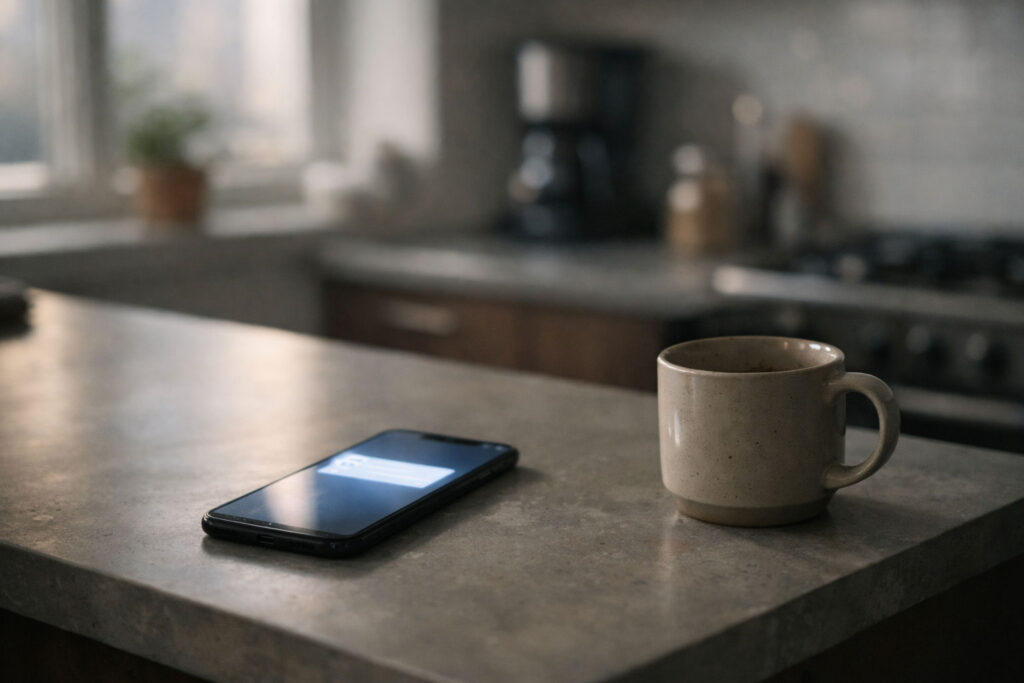
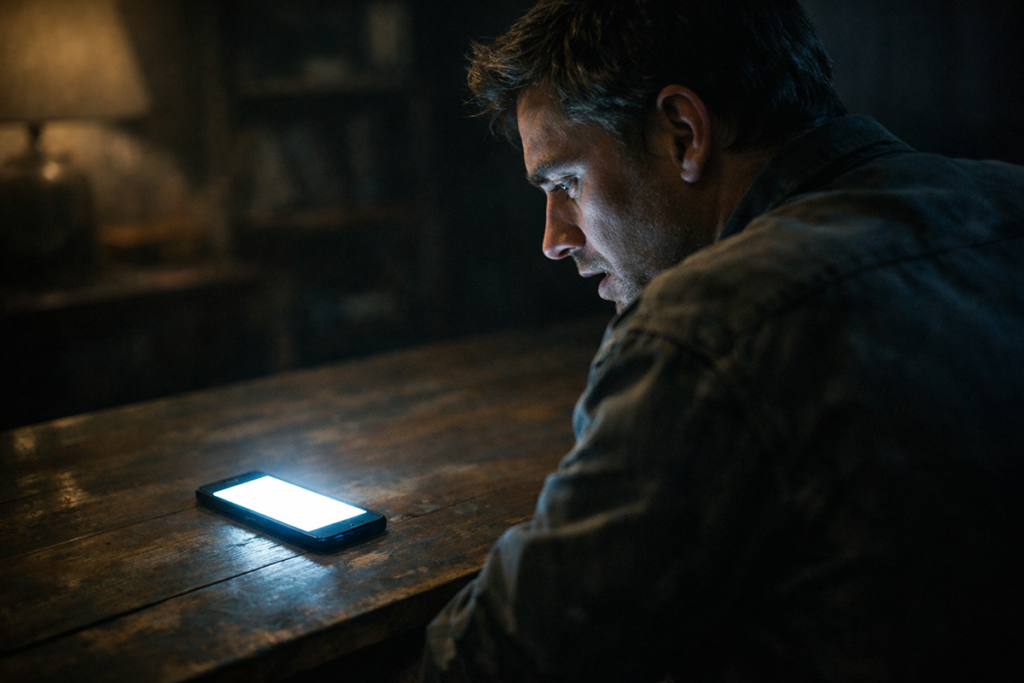
Sometimes, it’s not a confession.
It’s not a confrontation.
It’s a notification.
An accidental message. A preview on a locked screen. A name you’ve never heard before. A sentence that doesn’t make sense—until it suddenly does.
Discovering something you weren’t meant to see can shake the foundation of a relationship in seconds. And the worst part? You’re left questioning not only your partner—but your own instincts.
This is a deeply human and common real-life issue. Many people search questions like:
- What should I do if I accidentally find out my partner is hiding something?
- Is emotional cheating worse than physical cheating?
- How do I rebuild trust after betrayal?
- Am I overreacting or is this a red flag?
This guide walks you through the psychology behind accidental discoveries, how to respond calmly and wisely, and how to protect your emotional health moving forward.
Table of Contents
- Why Accidental Discoveries Hurt So Much
- Are You Overreacting? How to Assess What You Found
- Emotional Cheating vs. Physical Cheating: What Hurts More?
- What to Do Immediately After You Discover Something
- How to Have the Conversation Without Exploding
- Can Trust Be Rebuilt After Betrayal?
- When It’s Time to Walk Away
- Healing Yourself After Emotional Shock
Why Accidental Discoveries Hurt So Much
Accidental discoveries cut deeper than planned confessions because they feel like:
- A violation of emotional safety
- Proof that something was hidden
- Evidence you weren’t meant to know
- Confirmation of a gut feeling you tried to ignore
Psychologically, the pain comes from broken narrative trust. You had a version of your relationship in your mind. That message, that screenshot, that email—rewrites the story instantly.
Your brain reacts with:
- Shock
- Adrenaline
- Obsessive overthinking
- Replay loops of “What else don’t I know?”
“The deepest betrayal isn’t always the act itself—it’s the realization that your reality may have been incomplete.”
That’s why even small discoveries can feel catastrophic.
Are You Overreacting? How to Assess What You Found
Before confronting anyone, pause.
Ask yourself these questions:
1. What exactly did I see?
- Was it clearly romantic?
- Was it flirtatious?
- Was it secretive?
- Or was it ambiguous and open to interpretation?
2. Is there a pattern?
One isolated message is different from:
- Deleted chats
- Hidden apps
- Defensive behavior
- A history of dishonesty
3. Am I reacting to facts—or fear?
Sometimes, our past experiences amplify our current reactions.
If you’ve been cheated on before, even neutral events may feel threatening. That doesn’t make your feelings invalid—but it does mean clarity is essential.
“React to patterns, not panic.”
Emotional Cheating vs. Physical Cheating: What Hurts More?
Many people search this exact question.
Research and relationship therapy consistently show that emotional betrayal can hurt just as much—sometimes more—than physical infidelity.
Why?
Because emotional cheating involves:
- Intimacy
- Vulnerability
- Secrets
- Shared emotional energy
Signs of emotional cheating may include:
- Constant texting with someone new
- Sharing personal struggles with them instead of you
- Deleting messages
- Comparing you to them
- Emotional defensiveness when questioned
Physical cheating may be an act.
Emotional cheating is an investment.
Both damage trust—but emotional betrayal often erodes connection more subtly and deeply.
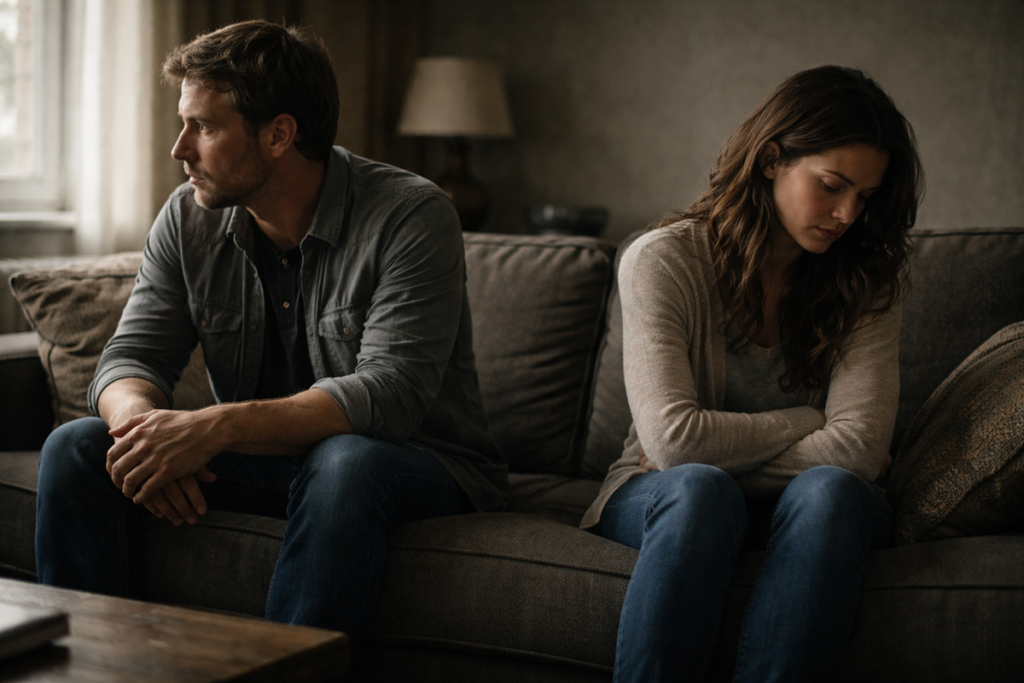
“When communication completely breaks down, the silence can be deafening. (Read our short story, The Day She Stopped Correcting Him, to see how emotional distance slowly changes a relationship).”
What to Do Immediately After You Discover Something
The first 24–48 hours are critical.
1. Do Not React in Rage
Sending angry texts, posting online, or confronting publicly can escalate things unnecessarily.
Take space.
2. Regulate Your Nervous System
Your body may feel shaky or restless. Try:
- Slow breathing (4 seconds in, 6 seconds out)
- A walk without your phone
- Writing down exactly what you saw
- Talking to one trusted friend—not ten
3. Avoid Obsessive Investigation
It’s tempting to:
- Check their phone repeatedly
- Scroll through old messages
- Create mental crime-scene timelines
This usually increases anxiety, not clarity.
How to Have the Conversation Without Exploding
When you’re ready, approach it calmly.
Use “I” Statements
Instead of:
- “You’re cheating on me.”
Try:
- “I saw a message that made me uncomfortable, and I need to understand what’s going on.”
Ask Open Questions
- “Can you explain this context?”
- “Is there something happening I don’t know about?”
- “Why was this hidden?”
Watch the Response
More than the explanation, observe:
- Do they take responsibility?
- Do they minimize your feelings?
- Do they get aggressive?
- Do they show empathy?
Defensiveness and gaslighting are major red flags.
“Honesty may hurt—but manipulation destroys.”
Can Trust Be Rebuilt After Betrayal?
Yes—but only under specific conditions.
Trust rebuilding requires:
1. Full Transparency
- No secret accounts
- No password hiding
- Willingness to answer uncomfortable questions
2. Consistent Behavior Change
Words don’t rebuild trust. Patterns do.
3. Emotional Accountability
Your partner must acknowledge:
- The pain caused
- The impact of secrecy
- The breach of emotional safety
Couples therapy can help if both parties are willing.
However, if someone:
- Blames you
- Calls you “crazy”
- Refuses accountability
- Continues secret behavior
Trust will likely erode further.
When It’s Time to Walk Away
Not every relationship should be saved.
Consider leaving if:
- This is repeated behavior
- You feel constantly anxious or suspicious
- You’ve become someone you don’t recognize
- There is emotional manipulation
- You are afraid to express concerns
Staying in chronic uncertainty can damage:
- Self-esteem
- Mental health
- Emotional security
Sometimes, the hardest decision is also the healthiest one.
Healing Yourself After Emotional Shock
Whether you stay or leave, healing is essential.

1. Reclaim Your Identity
Betrayal often makes people shrink.
Reconnect with:
- Friends
- Hobbies
- Physical health
- Personal goals
2. Stop Self-Blame
Common thoughts:
- “Was I not enough?”
- “Did I push them away?”
- “If I had done more…”
Betrayal reflects the other person’s choices—not your worth.
3. Rebuild Internal Trust
Sometimes the real wound is not “I can’t trust them.”
It’s “Why didn’t I trust myself?”
Learn to:
- Notice your intuition
- Address discomfort earlier
- Speak up sooner next time
Healing isn’t about forgetting.
It’s about integrating the lesson without hardening your heart.
Final Thoughts
Accidental discoveries in relationships are devastating because they shatter certainty. They force us to question love, trust, and sometimes even our own judgment.
But they also reveal something powerful:
What you truly need to feel safe.
What you will no longer tolerate.
What kind of partnership you deserve.
If this topic resonates deeply, and you want to experience the emotional side of such a moment through story, explore the fictional narrative that inspired this guide.
Sometimes, reading the psychology behind a betrayal isn’t enough—you need to process the emotional reality of it. Step into the shoes of someone living through this exact nightmare in our short story, The Message That Wasn’t Meant for Me. Experience how one accidental screen notification can unravel a perfectly normal evening.
Sometimes analysis helps us understand.
Stories help us feel.