

One hurried signature turned a small favor into a crime he would spend years trying to undo.
Table of Contents
- A Pen That Hesitated
- A Favor That Didn’t Feel Dangerous
- The Signature No One Explained
- When the Letter Arrived
- Trying to Undo Ink
- Courtrooms, Calendars, and Silence
- What the Years Took Away
- What Stayed Behind
- The Weight of a Name on Paper
A Pen That Hesitated
The pen felt heavier than it should have.
Raghav noticed it because his hand paused—just for a moment—hovering above the paper. Outside the office window, a bus hissed to a stop. Somewhere down the corridor, someone laughed. The day moved on without waiting.
That pause lasted less than a second.
Then he signed.
Years later, he would remember that exact instant more clearly than birthdays, promotions, or breakups. The faint smudge of blue ink on his thumb. The quiet confidence with which the clerk stamped the page. The way no one in the room treated it as important.
Because no one ever does.
Some mistakes announce themselves loudly.
Others arrive disguised as routine.
A Favor That Didn’t Feel Dangerous
Raghav was thirty-two, recently promoted, and still unsure whether he truly belonged in the role. His job in accounts paid well enough to keep his life stable, if not impressive. He lived alone in a rented apartment where the walls smelled faintly of moisture and reheated food.
His mother called every Sunday. His father rarely called at all.
The favor came from Sanjay, a name from an older chapter of Raghav’s life. They had shared hostel rooms, late-night panic before exams, borrowed money without receipts. They were no longer close, but history creates its own kind of obligation.
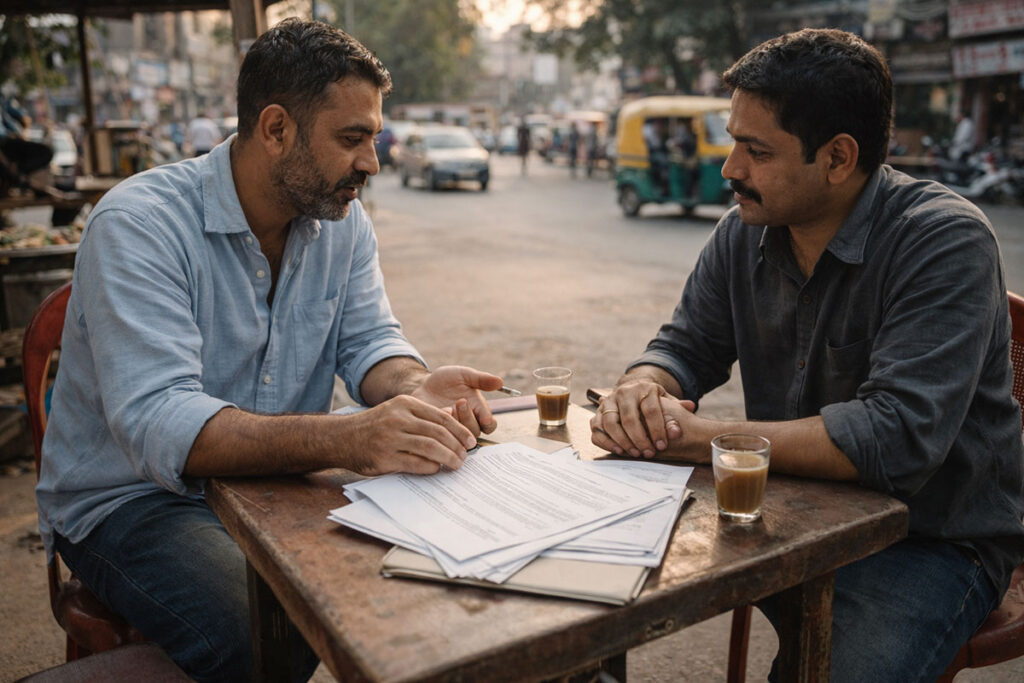
They met at a roadside tea stall near Raghav’s office. Sanjay looked thinner than before, eyes shadowed with fatigue. He talked quickly—about delays, about business partners who hadn’t delivered, about paperwork stuck in offices that never picked up the phone.
“It’s temporary,” Sanjay said, stirring sugar into his tea. “Just stuck in the system.”
Raghav nodded, half listening, already late for work.
“There’s one thing I need,” Sanjay added, lowering his voice. “A witness signature. Just a formality.”
Raghav frowned. “For what?”
“A loan guarantee,” Sanjay said. “But don’t worry. I’ve already signed. They just need someone with a steady job.”
The word steady lingered between them.
Raghav felt a small, unfamiliar pride at hearing it applied to him.
The Signature No One Explained
The document arrived two days later.
Dense paragraphs. Legal language. His name typed neatly near the bottom. Sanjay pointed exactly where the pen should go, his finger already trained on the spot.
“You’re not responsible for anything,” he said quickly. “It’s just to satisfy their checklist.”
Raghav skimmed the page, not line by line, but in the way people skim things they expect to be harmless. He didn’t want to look distrustful. He didn’t want to seem dramatic.
He asked one question.
“You’re sure?”
Sanjay smiled, easy and familiar. “Would I mess you up?”
The answer came too fast.
Raghav signed.
The clerk stamped. The file disappeared into a stack. The world continued exactly as it had before.
That was the most convincing part.
When the Letter Arrived
Nothing happened for months.
Raghav worked late. He paid rent. He ignored messages asking when he would “settle down.” Sanjay stopped calling, which felt normal enough. People drift.
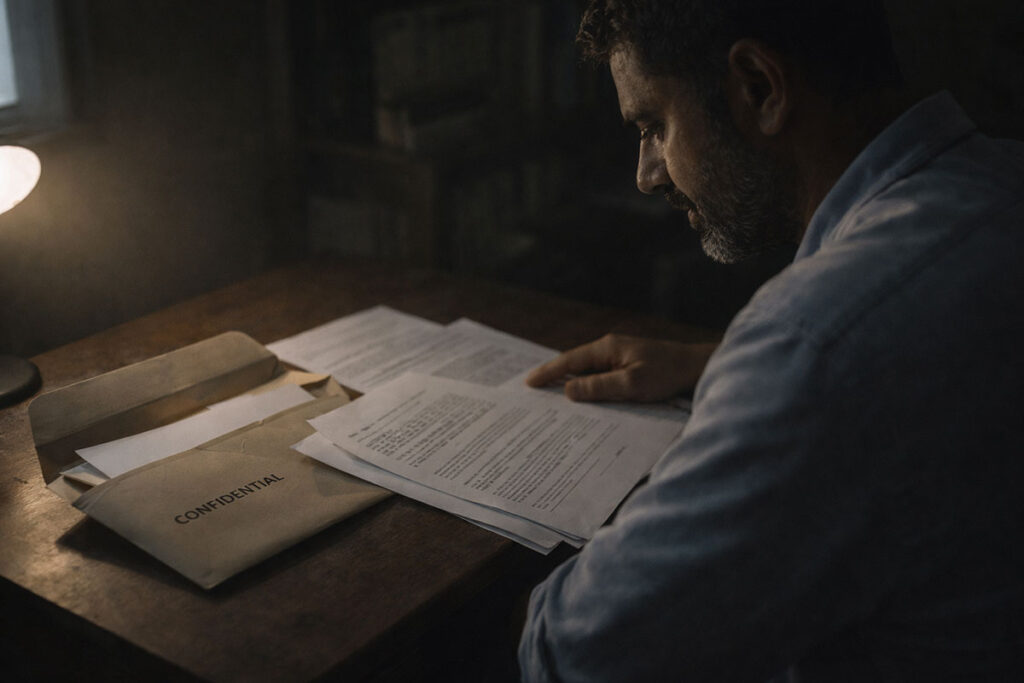
Then one morning, a courier arrived at the office.
The envelope was thick. Official. The kind that makes your stomach tighten before you even tear it open.
Inside were photocopies of documents marked with yellow highlighter. His name appeared again and again.
Guarantor.
The word felt wrong in his mouth, like a language he hadn’t agreed to learn.
He called the number printed at the bottom of the page. The woman on the line spoke calmly, professionally.
“Yes, sir. The primary borrower has defaulted. As guarantor, the responsibility now falls on you.”
Raghav laughed once, short and confused. “There must be a mistake.”
There wasn’t.
Trying to Undo Ink
Sanjay’s phone was switched off.
Emails bounced back. His office address no longer existed. Partners were “unreachable.”
The loan amount was more than Raghav earned in several years.
He visited a lawyer whose office smelled of dust and old paper. The man read the documents carefully, nodding slowly.
“You signed,” the lawyer said. “That’s the problem.”
“I didn’t understand,” Raghav replied.
The lawyer shrugged. “The law assumes you did.”
That sentence followed Raghav everywhere after that.
Court notices arrived regularly. Bank representatives called with practiced politeness that never crossed into sympathy. His employer was informed. His promotion suddenly felt provisional, fragile.
Friends reacted differently. Some offered advice that sounded suspiciously like blame.
“You should have read everything.”
“Why would you sign for someone else?”
Raghav asked himself the same questions every night, staring at the ceiling fan slicing the dark.
Courtrooms, Calendars, and Silence
The case dragged on.
Years passed not in chapters, but in adjournments. Raghav learned the language of liability, repayment schedules, and settlement offers. His savings disappeared. Plans dissolved quietly.
Marriage proposals stopped coming.
His parents aged faster in his mind, worn down by a worry they didn’t fully understand. He stopped explaining. Silence was easier.
Once, on a crowded railway platform, he thought he saw Sanjay. The same posture. The same walk. For a brief moment, he imagined shouting, demanding answers.
The man boarded a train and vanished.
Raghav stayed where he was.
What the Years Took Away

The hardest part wasn’t the money.
It was how the world slowly redefined him—and how he began to see himself. He became cautious to the point of suspicion. Every request felt dangerous. Every document carried weight.
Trust, once freely given, now required footnotes.
He learned to live smaller. He declined favors. He avoided entanglements. Some nights, he stood on his balcony watching lights flicker on in other apartments, wondering how many quiet disasters were unfolding behind those windows.
Not every crime feels like one at first.
Some look exactly like kindness.
What Stayed Behind
Eventually, the case settled.
Not cleanly. Not fairly. But conclusively.
Raghav paid more than he could afford and less than what was demanded. The law closed its file. The bank moved on.
The damage didn’t.
Years later, his hand still paused when asked to sign anything. He flipped to the last page first, scanning carefully before reading anything else.
He didn’t tell the story often. When he did, he kept it simple. No villains. No speeches. Just a fact.
A favor misunderstood.
The Weight of a Name on Paper
What Raghav learned wasn’t dramatic.
He learned that small decisions cast long shadows. That trust becomes something else once it is written down. That ink doesn’t fade the way memory does.
Sometimes, while filling out forms, he feels that old pause return—the weight of the pen, the quiet room, the moment no one warned him about.
And he waits.
Are you a victim of identity theft or forgery?
Discovering a signature that isn’t yours is a violation of trust and law. Don’t panic—take action. Read our expert guide on Identity Theft & Signature Forgery: How to Protect Your Legal Rights for a step-by-step recovery plan.
Disclaimer
This story is a fictionalized narrative inspired by real-life situations.